

Daisy is a beagle mix, eight years old, about twenty six pounds, and she has opinions about anything that comes near her mouth. Tablets get pushed onto the tile. Pills rolled in cheese get unwrapped with her tongue and left on the floor. For as long as I have tried tablets with her, they have gone onto that floor more often than into her. So when our vet said to think about a joint supplement for her, the real question was not whether it would help. It was whether she would eat it. That is the whole case for a soft chew, and it is why a tub of VETIQ Maximum Strength Hip and Joint soft chews got a fair trial in our kitchen, one chicken flavored chew at a time.
Ten reasons, in the order they happened to us.
The chew Daisy finished instead of spitting onto the tile
Soft, chicken flavored, 180 to a tub. One a day at the amount the label's chart gives for your dog's weight. Ask your vet before you start, especially if your dog is on other medication.
Amazon Check Today's Price on Amazon →She took it on the first try, after a long run of tablets on the floor
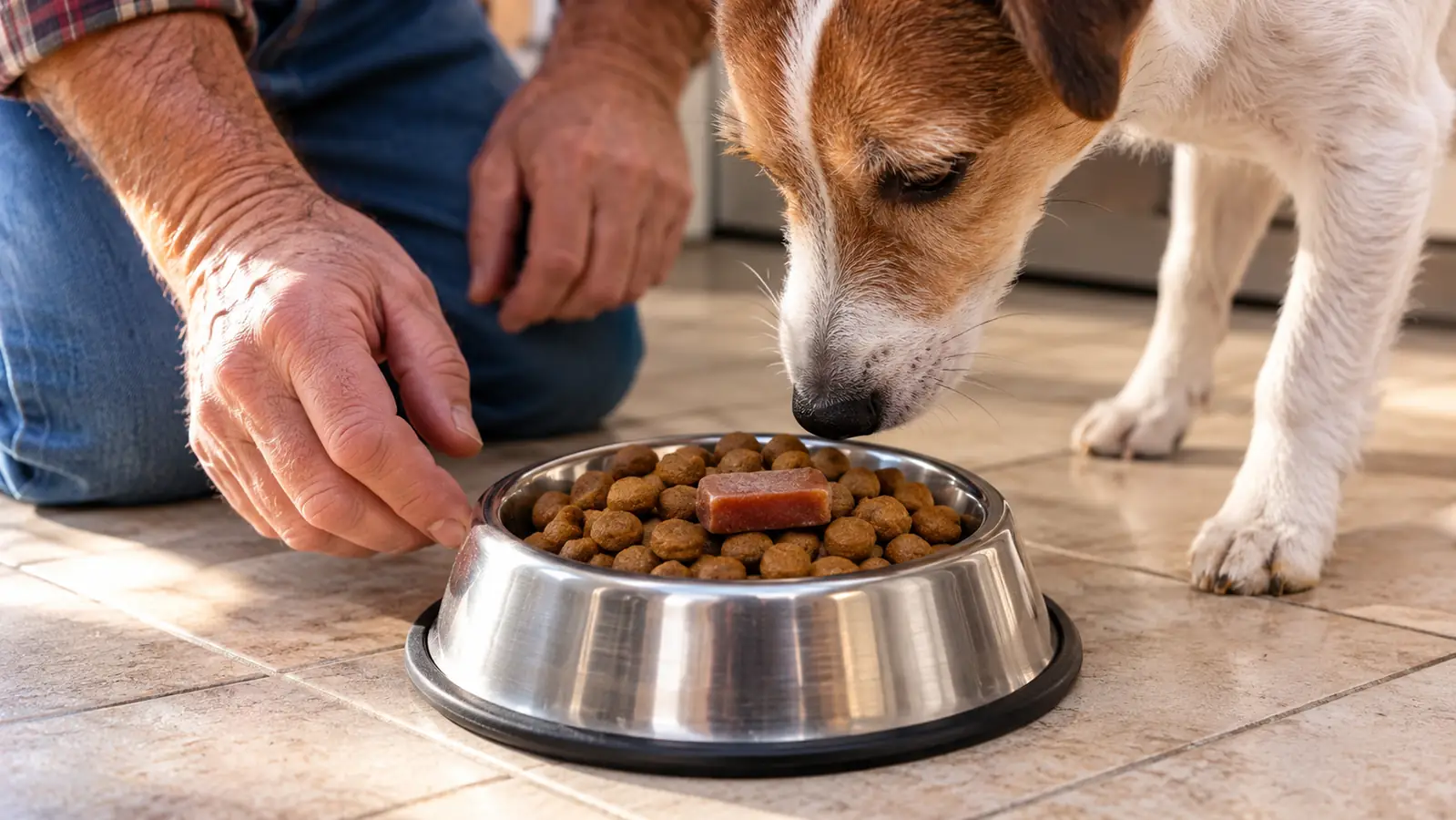
April 2025. I set one chew on the edge of Daisy's bowl and stepped back to the counter, the way you do when you expect to be disappointed. She sniffed it, picked it up, and carried it into the den. I waited for the wet slap of a chewed up tablet hitting the tile. It never came. That was the audition, and it is the reason every other item on this list gets to matter. A picky dog does not care how good a label is. She cares what it feels like in her mouth.
The chicken flavor does the persuading, so you can retire the pill pockets
Chicken flavor is on the label, and in our house that is the part that closes the deal. Daisy does not need a pill pocket, a slice of cheese, or a spoon of peanut butter with a tablet buried in it. She does not need to be fooled, and I do not need to hold my breath while she eats around the hiding place. She thinks she is getting a treat. I am not going to correct her.
No crushing, no soaking, no mortar and pestle in the cabinet
The old routine involved a small mortar and pestle, a tablet ground to powder, and a spoon of wet food I hoped would hide the grit. Daisy ate the food and left the grit in a ring around the bowl. Now the routine is: open the tub, take one out, hold it flat in my palm. Half a minute, no dishes. When a dog takes something every day for months, the routine matters as much as the ingredients, because a routine you dread is a routine that quietly stops.
You watch the whole chew go in, so you stop guessing
When you crush a tablet into food, you are guessing. Some of it goes into the dog, some of it dries on the bowl, and you have no idea which. With a chew, you stand there and watch her finish it. That sounds like a small thing until you are keeping a log in a spiral notebook taped inside a cabinet door, which is what I do. I write down what went in and when. A chew is the only form I can log with any confidence at all.
Soft enough for a small mouth that turns down hard tablets
Daisy is about twenty six pounds, with the small mouth that goes with it, and a hard tablet is a fight for her. The VETIQ chews are soft enough that she works through one in a few bites, without the crunch, the drop, and the second attempt at a piece that rolled under the stove. Hank is seventy eight pounds and eleven years old with his own supplement, but the point holds for any older dog whose enthusiasm at the bowl is not what it used to be.

The label lists amounts I can actually read, not a vague blend
I taught fourth grade for thirty one years, so I read a label the way I used to grade a paper, pencil in hand and one eyebrow up. The VETIQ Maximum Strength panel lists Glucosamine HCL at 600 mg, Fish Oil at 280 mg, and Krill at 210 mg, with MSM right there in the product name. It is a chicken flavored soft chew, 180 to a tub. The amounts are printed plainly. I have put plenty of tubs back on a shelf because I could not tell what was in them.
One chew is the entire job, and the chart does the arithmetic
The label has a weight chart, and the chart gives the amount for Daisy's weight. I follow it and nothing else. I do not split chews, I do not double up because she had a bouncy afternoon, and I do not improvise. Whatever the chart says for her weight is what she gets. That is the whole dosing conversation in this house, and it takes less time than reading the weather report on the porch.
A 180 count tub gets you through months without a scramble
180 chews in one tub. With one dog on one chew a day, that is months, not weeks, and I am not making a special trip to town because we ran out on a Sunday morning. When you are managing a supplement for an older dog on top of everything else in a week, a tub that lasts is a small mercy. It also means the tub sits in the same cabinet long enough that I stop thinking about it, which is exactly what I want from a daily habit.
It goes where you go: porch, truck, vet waiting room
A chew needs no spoon, no bowl, and no refrigerator. One goes in a zip bag in my purse when Daisy has a vet appointment, and one goes out to the truck when Walt takes Hank somewhere. On the porch it goes straight from my hand to hers. Nothing to measure, nothing to spill on the seat, nothing to remember beyond the bag in the door pocket.
It got Daisy onto a joint supplement at all, which was the whole problem
Daisy takes a green lipped mussel chew now, at our vet's suggestion, and has since January 2026. That switch was not because anything went wrong with the VETIQ chews. It is because a soft chew opened the door in the first place. Before that tub, my honest answer about a joint supplement for Daisy was no, because she would not take one. If you have a dog who spits tablets, the form is the whole argument. I would rather have a dog on a chew she eats than a tablet she refuses.
What I'd Skip
I would skip the tablet if your dog is a tablet spitter, and I would skip the crushing routine, the pill pockets, and the spoon of wet food that leaves grit in a ring around the bowl. Not because there is anything wrong with those things. Because they add a step to a job you have to do every single day for months, and extra steps are where daily habits go to die. I would also skip giving two glucosamine products to the same dog at once. When Hank had a back tooth out in the fall of 2025, our vet had us switch him to a liquid for about six weeks, and we stopped his tablets entirely rather than stack them. And I would skip starting anything at all before a call to your own vet, especially for a dog on other medication. A supplement supports a joint. It does not fix one, and it is no substitute for keeping a dog lean and walking him every evening.
A chew she eats beats a tablet she spits onto the tile. That is not a small difference. That is the whole difference.
The chicken chew that ended the standoff at the bowl
One soft chew a day, at the amount the label's chart gives for your dog's weight. What I noticed with Daisy was simple: she takes it. Everything else starts there. Ask your vet first.
Amazon Check Today's Price on Amazon →