

Nobody warns you that the hard part of buying a joint supplement for an old dog is not the buying. It is the reading. I taught fourth grade for thirty one years, and I grade a supplement label now the way I used to grade a stack of book reports: slowly, with a pencil, looking for the sentence that does not add up. When our vet suggested a joint supplement for Hank in January 2025, I came home with a bottle of Nutramax Cosequin chewable tablets and about nine questions I had not thought to ask in the exam room. This is what I found out over two years of mornings, including the parts the product page does not say out loud.
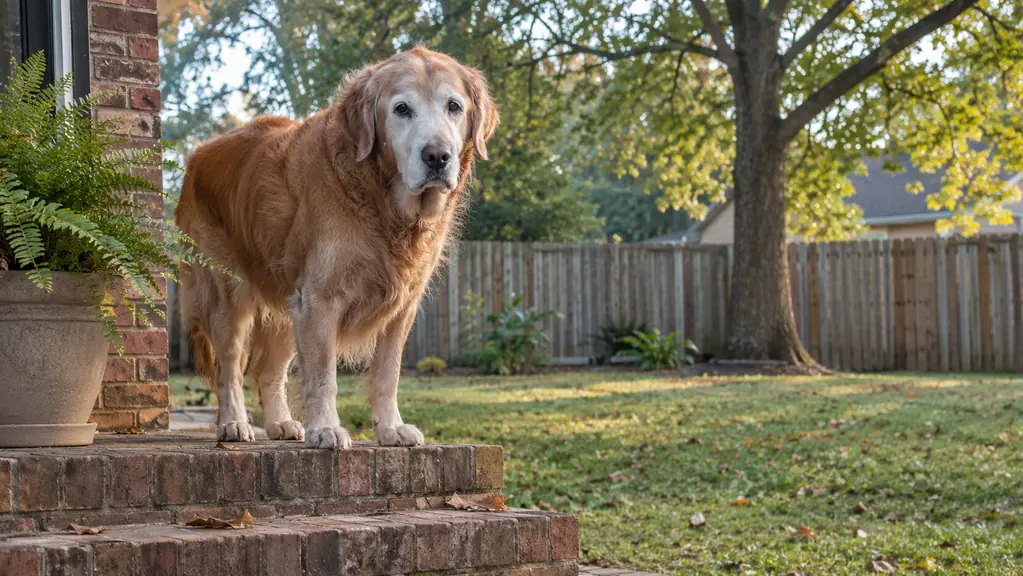
Hank is our yellow Labrador. He is eleven, about seventy eight pounds, and over the last couple of years he has gotten slow getting up after a nap, stiff on the three brick steps on a cold morning, and he stopped jumping into the back of Walt's truck. Our vet said age related stiffness in his hips and that he is a little heavy, and suggested keeping him lean and talking about a joint supplement. That is the whole of it. No long story, no diagnosis I am going to dress up. Just an old dog who slowed down and a woman with a spiral notebook and a pencil.
The Quick Verdict
The label is honest, the ingredients are the three our vet named, and Hank takes it like a treat. The catch is the form. It is a tablet, and a dog who will not take a tablet cannot take this product no matter how good the formula is.
Amazon Check Today's Price →The one our vet named first, and still the one in our cabinet
Chewable tablets with glucosamine hydrochloride, sodium chondroitin sulfate, and MSM. Read the weight chart on the label before the first dose, and ask your vet first if your dog is on any other medication.
Amazon Check Today's Price on Amazon →What the Label Actually Says, and What It Does Not
The active ingredients listed on the bottle are glucosamine hydrochloride, sodium chondroitin sulfate, and MSM. The listing names them with the same short identifiers a vet will recognize, FCHG49 for the glucosamine and TRH122 for the chondroitin, and mentions the MSM alongside them. I copied all three into the notebook before I opened the bottle, which is a habit left over from grading. The item form is a tablet. The item weight is twelve ounces. The product dimensions are listed at one by one by one inches, which I have decided not to think about. The listing puts the breed size at medium, with specific uses covering average, large, and small dogs.
The bottle holds 132 tablets, and that number matters to me, because it tells me how often I will be standing in the kitchen with my hand out. The label also carries a dosing chart by weight. I use the amount the chart gives for Hank's weight, and that is the whole of my method. I am not going to write a tablet count or a milligram figure into this piece, because your dog is not my dog and the chart is printed on the bottle in front of you. Read it. Then read it a second time, the way you would check a student's arithmetic.
What the label does not promise is that Hank will bounce. It says joint health support, and that is a smaller promise than most of us want when we are standing in a vet's office with a stiff dog. It took me a few months to make peace with that. A supplement supports a joint. It does not repair one, and any page that tells you otherwise is selling you something other than what is in this bottle. I say that as a person who wanted it to be more.
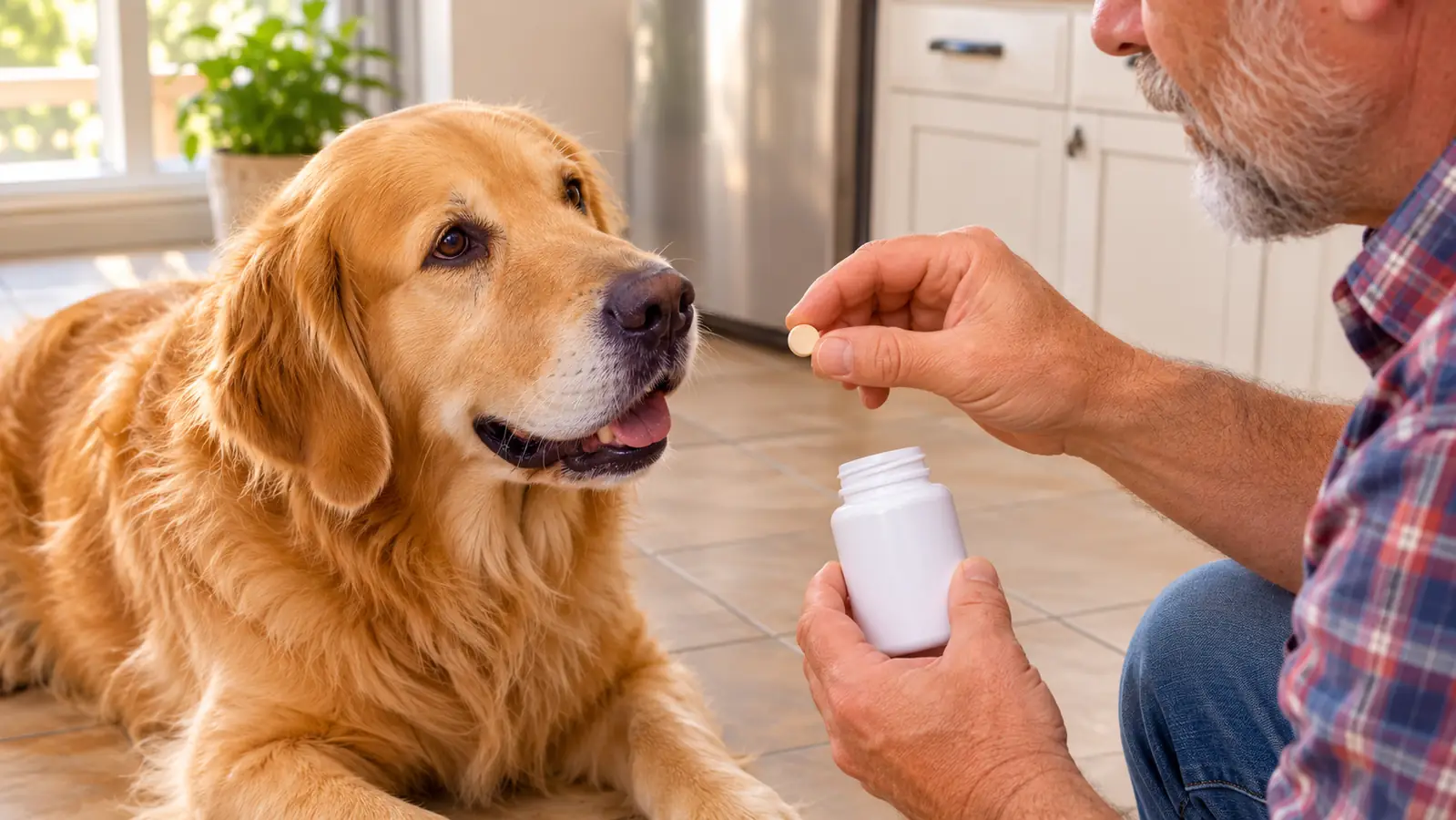
The Part Nobody Mentions: It Is a Tablet
Cosequin comes as a chewable tablet, and there is no way around that word. Hank takes his straight from my hand at breakfast and has never once turned his nose up at it. That is luck, not virtue. Daisy, our beagle mix, is twenty six pounds and will not take a tablet in anything. Not in peanut butter. Not in a slice of cheese. Not wrapped in turkey. She spits, she looks at me with real disappointment, and she walks off. Which is why Daisy has never been on this product and why she is on a soft chew instead. If you have a tablet dog, you are fine. If you have a Daisy, you will be shopping for a chew and this bottle will sit in the cabinet.
I want to be fair to the tablet, because it deserves it. It is small, and it does break, and I know people who crumble it into wet food and get away with it. Before this, Hank ate a cheap generic glucosamine from the feed store that way, crushed into his dinner every night, and I stopped buying it because it turned his meal into a project I had to manage at seven in the morning. With Cosequin I do not have to do that. He takes it and goes back to his bowl. That is most of the reason we stayed.
What the Listing Claims, Checked Against the Bottle
The listing makes a few claims I want to name plainly, because you will read them too. It calls Cosequin the number one vet recommended retail joint health supplement brand, and it says Nutramax Laboratories has been in pet health for more than twenty five years. I have no way to check the first claim and I am not going to pretend I do. What I can check is the panel on the bottle in my kitchen, and the panel matches what the listing says is inside it: glucosamine hydrochloride, sodium chondroitin sulfate, and MSM. That is the part that made me comfortable handing it to Hank every morning. Not the badge. The panel.
There are also small practical lines on that page that turned out to matter more than I expected. The item form is listed as a tablet, which is the entire conversation for a dog like Daisy. The allergen line reads almonds free, which is not a thing I had thought to worry about until I saw it written down. The item weight is twelve ounces, so I know what I am picking up. None of that is exciting. All of it is the sort of thing I used to tell my students to read before they raised a hand to ask me a question they could have answered themselves.
How We Have Actually Used It
The Nutramax bottle lives in the kitchen cabinet next to the spiral notebook I keep the log in, and it has lived there since the first week. Breakfast, every morning, the amount the chart gives for his weight, from my hand. We started in January 2025 and he has taken it every day since, with one exception I will get to. Alongside it he takes an omega 3 fish oil softgel that our vet said was fine to give with the glucosamine. Walt walks him every evening whether it is hot or not. And he has lost a few pounds because the vet asked us to get some weight off him. I list all of that on purpose, because none of this happens in a vacuum and I am not going to pretend that it does.
The exception came in the fall of 2025. Hank had a back tooth pulled and the vet said soft food only for a few weeks, so I stopped the tablets and poured a liquid glucosamine over his soft food instead, from mid September into late October, about six weeks in all. I did not give him both at once. I want to be plain about that, because two glucosamine products in the same dog on the same day is not something I would do without asking first, and I did not do it. He went back on the tablets at the end of October and has been on them since. The rest of that liquid bottle is in the pantry for the next time chewing is a problem.
Those six weeks were the only real comparison I ever got, and I did not much care for it.
What We Noticed, and What I Cannot Prove
Here is the honest part, and I have rewritten it twice to keep it honest. Over months on the tablets and the fish oil, Hank seems a little more willing on the back steps on a cold morning. He gets up from a nap a little easier than he did in the winter of 2024. That is the entire size of the claim. A little. Sometimes. I cannot prove the tablet did it. He is also leaner, he is walked every single evening, he is on fish oil, and he is a year older in the other direction. Any one of those could be doing the work, and I would be lying if I told you I could sort them out. What I can tell you is that during the six weeks he was off the tablets, I noticed the mornings more.
I keep the log for exactly this reason. Every morning I write the date, whether he took it, and one word about how he came down the steps. Most days that word is fine, and a lot of days it is nothing at all, because a boring morning is a good morning when your dog is eleven. But the log is not there to prove anything to you. It is there so I do not fool myself, which a person can do very easily when she wants a bottle to be the reason her old dog feels better.
Daisy is a different story and I want to be careful with it. She is eight, adopted from the Smith County shelter back in 2019, and still bouncy. Our vet suggested a joint supplement for her as a keep her moving step, not because of any problem he found. There is nothing to measure with Daisy, so I do not measure anything. She takes her soft chew, she eats it, she goes back to being a beagle. If you are reading this hoping I will tell you a supplement changed a dog's life, I am not going to be that person.
The Other Things in the Cabinet
The fish oil came in March 2025, after I asked our vet whether it was all right to give alongside the glucosamine and got a yes. Walt pokes the softgel and squeezes it over Hank's dinner, or Hank swallows it whole in a bite of cheese, depending on the evening and on how Walt is feeling. It is unflavored, which is the only reason any of it works. That is a separate product from this one, and I would not stack it onto a dog without asking first, the same way I would not stack two glucosamine products.
Daisy's road was different from the start. She began on a chicken flavored soft chew in April 2025 because she would not take a tablet and the soft chew went down on the first try. She stayed on it through December 2025, two tubs in all, and stopped only because in January 2026 our vet suggested trying a green lipped mussel chew for her instead. Nothing went wrong with it, and the second tub was finished down to the last chew. She has been on the mussel chew since and eats it just as eagerly. If your dog is a tablet spitter, that is the direction I would look first, and it is the direction I wish someone had pointed me toward two years ago.
The Parts I Do Not Love
First, the tablet. I have already been through it, but it belongs on the list. A dog who will not take a tablet cannot take this product, and no amount of good formulation changes that fact. Second, it is a supplement and not a fix, and I have talked to people who bought it expecting the first thing and got the second. If your dog is limping, dragging a leg, yelping when he stands, or has stopped eating, that is a vet appointment and not a bottle from Amazon. Third, the small print on the label is genuinely small, and I have good glasses for my age.
Fourth, and this one is my own fault, the count on the bottle makes me do arithmetic in my head every time I open the cabinet door. 132 tablets sounds like a great deal until you are measuring out the amount the chart gives you every single morning and watching the level drop. I write the start date on the cap now, which is what I should have done in January 2025 instead of trusting my memory. My memory is a retired teacher's memory. It grades generously and it rounds up.
What I Liked
- The label names all three actives plainly: glucosamine hydrochloride, sodium chondroitin sulfate, and MSM
- Hank takes the chewable tablet from my hand like a treat, no crushing and no hiding it in wet food
- Dosing chart by weight is printed on the label, so the amount is not a guess
- 132 count means fewer reorders and less rummaging in the cabinet
- The ingredient panel on the bottle matches what the listing says is inside
Where It Falls Short
- It is a tablet. A dog who spits tablets cannot take it, and that ends the conversation
- It is support, not repair. It will not fix a limp or stand in for a vet visit
- The small print on the label is genuinely small
- Daisy, twenty six pounds and a confirmed tablet spitter, never took it at all
Who This Is For
If you have a dog who takes a tablet from your hand without a negotiation, and your vet has already said a joint supplement is reasonable, this is the bottle I would put in front of you first. It is the one our vet named. The ingredients are the three I have been reading about for two years. The count lasts long enough that you are not reordering every few weeks. And the routine is about as simple as a routine gets: breakfast, the amount the chart gives for the weight, done. If you keep a log the way I do, write the start date on the cap. You will not remember it in March.
Who Should Skip It
Skip it if your dog will not take a tablet. Skip it if you are looking for something that will fix a limp, because this is not that and nothing on a shelf is. Skip it if your dog is on other medication and you have not asked your vet about interactions, because I am a retired fourth grade teacher with a notebook and a pencil, not a veterinarian, and I will not guess about your dog's prescriptions. And skip it if you need a promise of a result before you will buy anything. Nobody can give you one. What you can get is a plainly labeled product with the ingredients named, a dosing chart by weight, and an honest line on the bottle about what it is for.
If your dog takes tablets, this is where I would start
Two years in the kitchen cabinet next to the log book. Read the weight chart on the label before the first dose, write the start date on the cap, and give it a few months before you decide anything about it.
Amazon See Current Price on Amazon →