
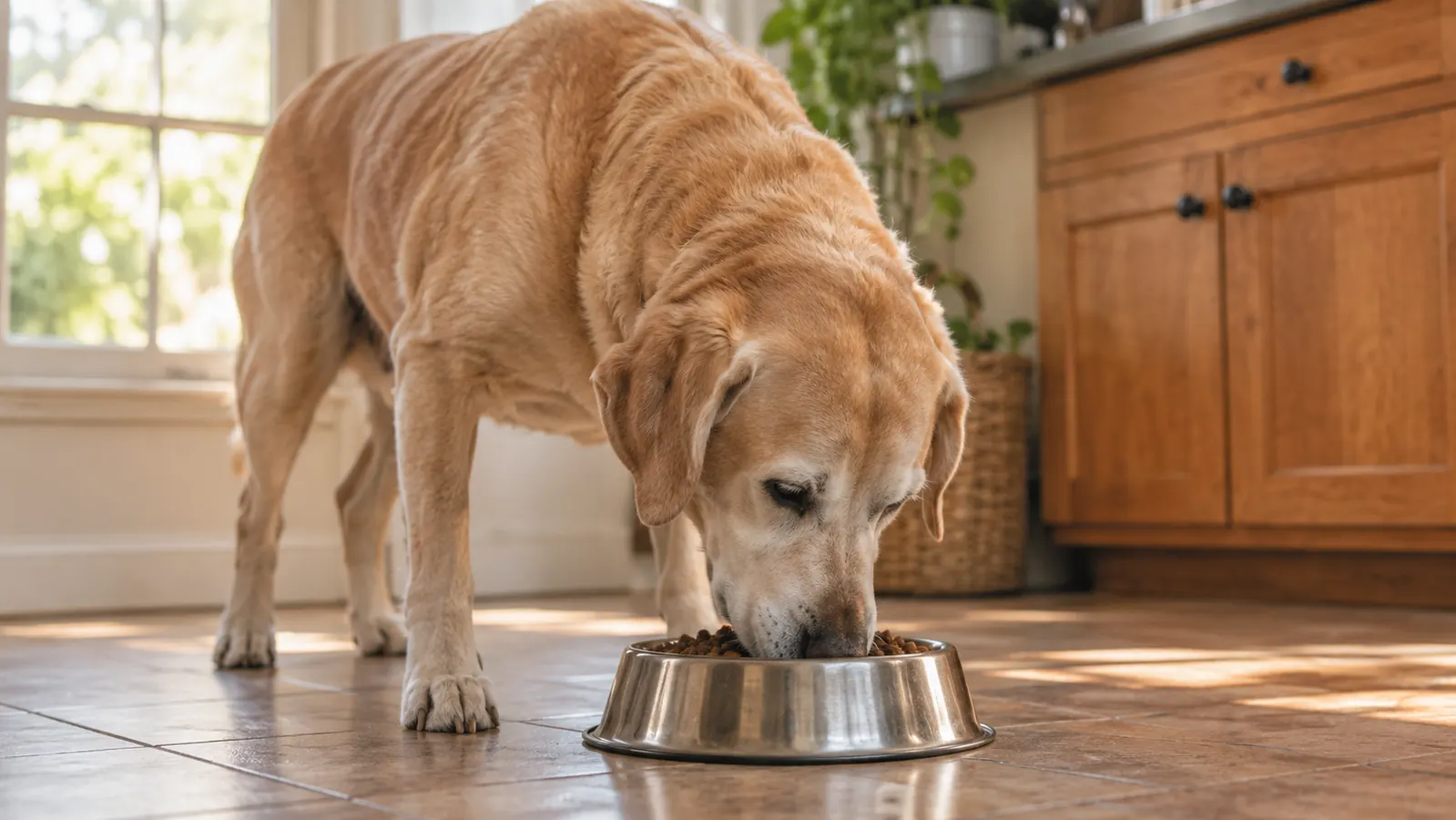
If your dog has ever had a dental or a tooth pulled, you already know the look. Hank, our eleven year old yellow Labrador, had a back tooth out in September 2025, and the vet's discharge note was plain: soft food only for a few weeks. Which meant no chews. No tablets tucked in a piece of cheese. Nothing that required grinding.
That is how I ended up standing in my kitchen reading the back of a bottle of Natural Dog Company Liquid Glucosamine hip and joint oil, salmon and peas, trying to figure out how to get it into him without turning breakfast into a wrestling match. It took me two tries to get it right. The steps below are what actually worked in our house, in order, with the mistakes included because the mistakes are the useful part.
The bottle I keep in the pantry for whenever chewing is a problem again
One measured pour over soft food was all Hank needed for six weeks. If your dog is on soft food or has gone off chews, this is the version I reached for.
Amazon Check Today's Price on Amazon →Before Step One: Ask Your Vet
I am not a vet. I taught fourth grade for thirty one years, which means I can read a label carefully and I know when I am out of my depth, and dosing a supplement is the second thing. Hank's vet is the one who suggested a joint supplement back in January 2025 and she is the one I called when the tooth came out, because I wanted to know whether stopping his tablet for a few weeks and switching to a liquid was reasonable or whether I was about to do something foolish.
She said it was fine to use a liquid while he was on soft food, and she reminded me not to run two glucosamine products at the same time. That mattered. If your dog is on any other medication, or has a condition your vet is managing, make the call first. It is a five minute conversation and it is worth it.
Step 1: Read the Guaranteed Analysis and the Dosing Chart Before You Open It
I grade labels the way I used to grade papers, red pen and all. The Natural Dog Company bottle lists glucosamine HCl from shellfish, chondroitin sulfate, MSM, and manganese on the active ingredients line, and it gives a dosing chart based on the dog's weight. I wrote Hank's number in the spiral notebook I keep taped inside the kitchen cabinet door, the same notebook where I track his tablets and his fish oil.
The instinct is to guess. Do not guess. A seventy eight pound Labrador and a twenty six pound beagle mix are not the same dose, and Daisy is not on this bottle anyway. Find your dog's weight on the chart, measure that amount, and write down the date you started so you have something to compare against in a month. If your dog's weight has changed since the last vet visit, use the new number.
One more thing on the label: it says salmon and peas flavor. I read that and assumed Hank would be interested. He was, but not for the reason I expected, which I will get to in Step 3.
Step 2: Pick Soft Food That Already Smells Like Something
My first mistake was stirring the oil into plain boiled chicken and rice, which is what I had been told to feed him after the tooth. Hank picked at it and left half the bowl. This oil is thin and it separates, so it pools at the bottom of the bowl and the top of the food tastes like nothing and the bottom tastes like fish. He is not a fussy dog and even he noticed.
What worked was the canned soft food from the vet's office, the kind that comes out of the can in a solid log and smells strong enough that Walt commented on it from the next room. Strong smelling wet food carries the oil. If you are mixing your own, use something with real flavor in it, not plain rice.
And keep the bowl shallow. A deep bowl means the oil sinks out of reach. A shallow bowl with a wide bottom gives you room to stir it through properly.
Step 3: Measure First, Then Pour, Then Stir It Through
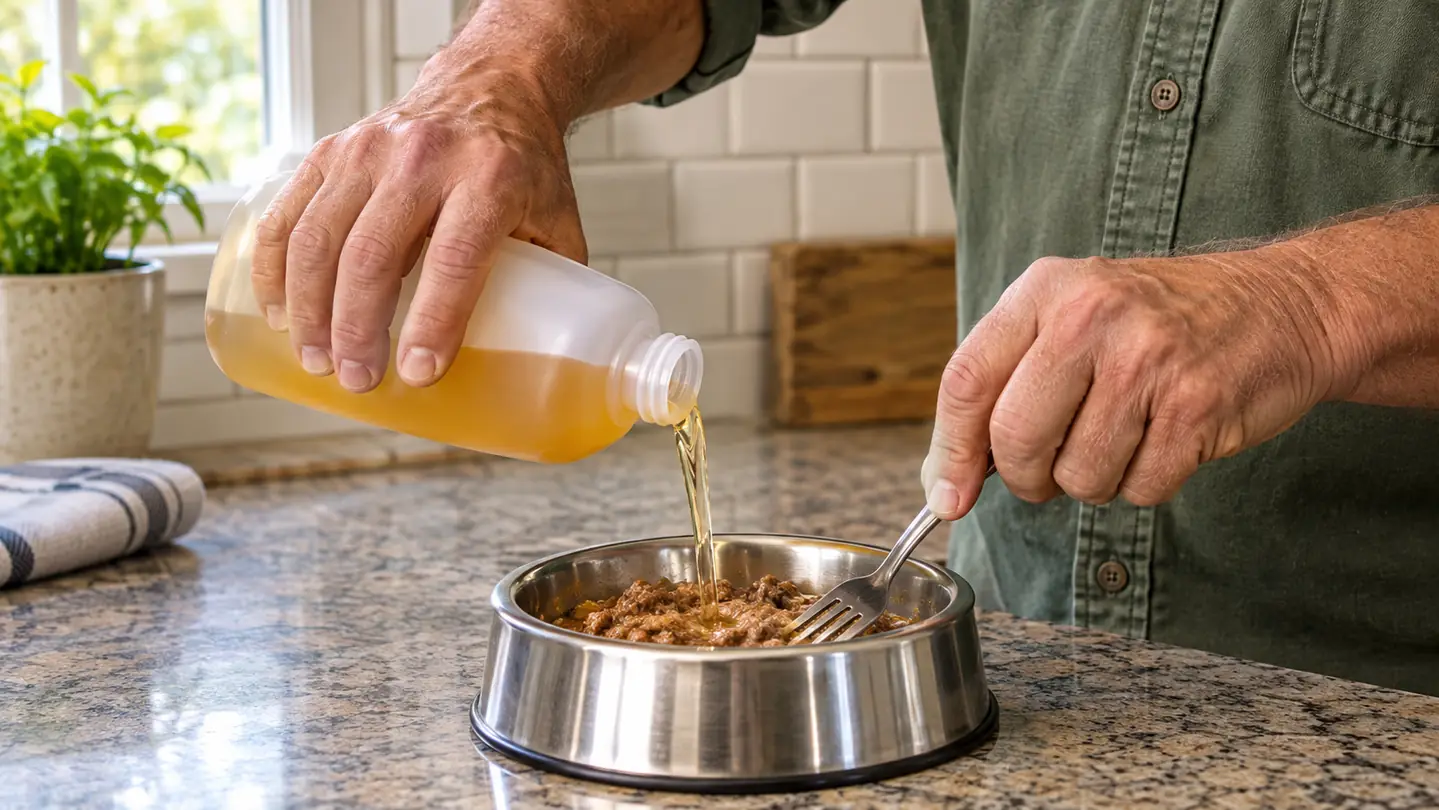
Here is the order that stopped the mess. Measure the amount the chart gives for your dog's weight into a small cup or directly into a well in the food. Then pour it over the food in a spiral rather than all in one spot. Then stir, and I mean stir, until you cannot see a puddle anywhere. Thirty seconds with a fork.
The reason for the spiral is simple: a single pour makes one soaked bite and twenty dry ones. Hank would find the soaked bite, eat it, and walk away from the rest. Spread it and stir it and every bite tastes the same, so he finishes the bowl.
This is also where I learned he liked it. He did not just tolerate the salmon and peas oil, he licked the bowl afterward. That surprised me, because he is not a dog who licks bowls. When chewing became an option again in late October, I put him back on his chewable tablets and put the rest of this bottle in the pantry, and I have wondered since whether he missed it.
The label's chart gave me the amount for his weight. Everything after that was just getting it into him without a fight.
Step 4: Serve It Immediately and Watch the First Bowl
Liquid supplements sitting in wet food get absorbed and the food gets soupy. Mix it and set it down, do not mix it and go start a load of laundry. The first time you use it, stay in the kitchen and watch. Not because anything bad is likely, but because you want to know whether your dog eats it, and you want to know whether the whole bowl gets finished or whether you are going to be scraping half of it into the trash.
With Hank, the whole bowl went. With Daisy I would not have been so sure. She is a beagle mix who spits out pills hidden in anything, which is the entire reason she has been on soft chews since April 2025 instead of tablets. If your dog is a Daisy, expect the first bowl to be a negotiation and have a backup plan ready, which is Step 5.
Give it the same time every day. Hank's bowl goes down after Walt's evening walk, same as always. Keeping the routine identical is how you avoid the dog deciding one day that the food is suspicious.
Step 5: Log It, and Keep the Rest of the Routine Steady
I wrote the start date in the spiral notebook and a note each week, short, one line. Nothing dramatic. Something like: ate it all, no hesitation. Or: left the last third, cut back on the oil next time. Six weeks of that gave me more information than any review I could have read, because it was about Hank and not about somebody else's dog.
The other half of Step 5 is boring and I will say it anyway. Hank was on soft food because of a tooth. He was also still getting his fish oil, still walking every evening with Walt, still carrying a couple of pounds the vet wanted off him. If I had changed all of that at once and he seemed better, I could not have told you which thing did it, and I would have been guessing. Keep the rest of the routine steady while you try the new thing.
And be honest in the notebook. Over the months Hank has been on his joint support, what I noticed is that he seems a little more willing on the three brick steps on cold mornings, and he gets up from a nap a bit easier. That is what I can say. I cannot tell you the arthritis improved, because I am not a vet and that is not a thing I can see. Supplements support joints. They do not fix them, and anyone who tells you otherwise is selling something.
What Else Helps
Three things that are not the oil and that I would not skip. First, keep the weight down. The vet told us Hank was carrying a few extra pounds and that leaning him out would do as much for his hips as anything in a bottle. Walt grumbled about measuring the food. Walt measures the food now.
Second, walk on a steady surface and skip the slick floors. Our house is tile and laminate and Hank slid on the turn from the kitchen into the hall for a while before we put a runner down. Three brick steps out the back door are still three brick steps, but a runner and a little patience going down them made a difference in how confident he was.
Third, have a chew-free backup in the house for the next time chewing is a problem. That is the only reason I still have part of a bottle in the pantry. Teeth happen. Surgeries happen. Having the soft option on hand beats driving to the feed store the night before.
If you want my longer write-up on how the Natural Dog Company liquid performed over those six weeks compared to Hank's usual tablets, I put the details in the Natural Dog Company liquid glucosamine review I kept while he was on it. And if you are trying to decide between liquid and chews in the first place, I compared them side by side, because the honest answer is that it depends entirely on whether your dog will chew.
Shallow bowl, wide bottom, one measured pour, thirty seconds of stirring
That is the whole method. It worked on a seventy eight pound Labrador who had just lost a back tooth. Check the dosing chart for your dog's weight and ask your vet if anything else is going on.
Amazon Check Today's Price on Amazon →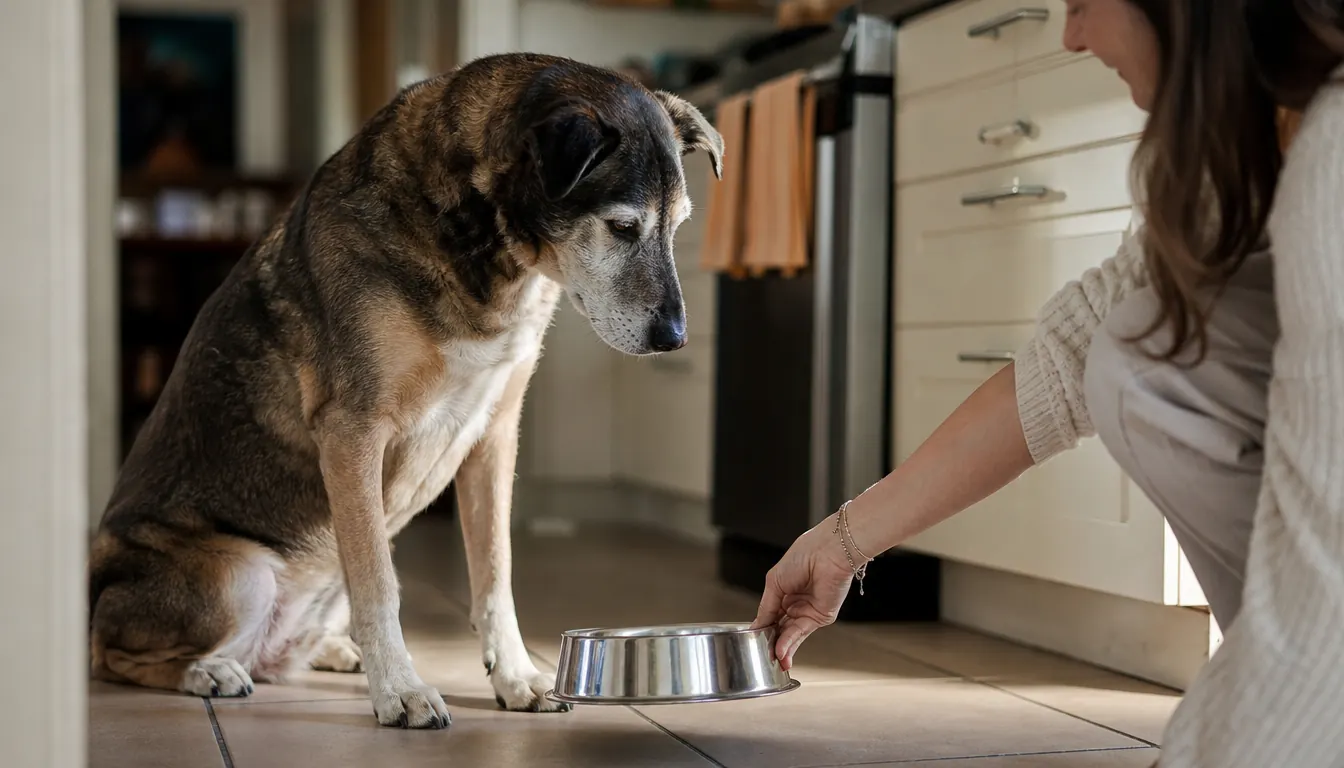
Frequently Asked Questions
Can I put it on dry kibble instead?
You can, and it will soak in, but it will soak into a few pieces and leave the rest dry. If your dog is back on kibble, I would put the oil in a small amount of wet food at the bottom of the bowl and put the kibble on top, so the dog has to get through it to get to the kibble. That is a trick from a friend with a picky terrier and it works better than drizzling.
What if my dog will not eat it at all?
Then stop and call your vet. There is no point forcing a supplement into a dog who has decided against it, and there are other forms. Daisy is the proof. She would not take a tablet in anything but a soft chew, so her joint support has been a soft chew since April 2025 and she has been perfectly happy about it. Not every dog is a liquid dog.
Can I give it alongside his regular tablets?
Not without asking your vet, and in our house the answer was no. When Hank went on the liquid in September 2025, I stopped his chewable tablets for those six weeks so he was never on two glucosamine products at once. Then I put him back on the tablets in late October. If you are unsure, that is the question to ask, not the one to guess at.
Last thing, and then I will let you go. Every dog is different, and mine is one dog. What worked on a seventy eight pound Labrador with some age related stiffness in his hips is a starting point, not a rule. Read the label, call your vet, write it down, and give it a few weeks before you decide anything.